
I’m really looking forward to this – my library opens our new Level 2 Tech Center on Monday!
What can you find there? A mix of really cool technology, including:
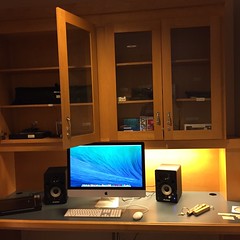
- Two small recording studios – one focused on audio, and one on video (audio can be done there too). Each room has a Presonus audio interface, great microphones, and a beefed up iMac. The video room has a Pearl Mini for livestreaming.
- Digital Art Studio – this space has 8 computers with the Adobe Suite (a mix of Macs and PCs), two 3D printers, a Cricut digital cutter, a 3D digital scanner, and a laminator.
- 30 public computers
- 5 small meeting rooms (we’re calling these the CoLab Rooms)
- Chairs and couches for a more informal gathering experience
Who do we think will use the space? Our focus in this space is on entrepreneurs, non-profits, teachers, hobbyists, and other people wanting to make things. Kids, teens and the curious are certainly welcome as well!
I also know some musicians who are pretty excited about the space, and we have already invited an area podcast team to try out the space (and to mention us on their podcast, as well). At the moment, Topeka doesn’t really have a recording studio; certainly not one that is free for everyone to use!
How did we “find” this space? Like most libraries, we had some storage space in the basement that was mostly full of old chairs, tables, and other random stuff. We emptied that space, renovated it, and moved our Technical Services department to that space. Then we started remodeling their old space, which has morphed into this cool new public space.
It will be a bunch of fun to see how the space gets used and who uses it! Find out more about our new Tech Center on this page.


 My library
 My library just opened our new makerspace, called the