digital experience

Inviting Comments

by David Lee King on December 17, 2009

Sometimes, a blog post or article on a library website doesn’t get any comments. And that’s fine – not every post is comment-worthy, right? But there are ways to prompt, or “invite” visitors to comment … even by using the website’s built-in comment functionality. Let me show you what I mean.

Here are two examples – the first from my library’s website, and the second one from Atchison Public Library. Both of these examples are screenshots taken from the main page of both websites – each a teaser for an article.

Mine first (screenshot below):

no prompting

We let the comment functionality simply announce that no one has left a comment on this post (and darn it – it’s MY post!). We do that via the text “0 Comments.” This works fine – it’s what that functionality is supposed to do.

But check this out – here’s what Atchison Public Library does (screenshot below):

prompting for comments

See the difference? Atchison uses their lack of comments to … invite people to comment. They do this by prompting their website visitors to “be the first to comment.”

I know – it’s one of those little detail-y things. But it’s that type of detail, that focus on inviting patrons to participate, that just might prompt them … to participate. It might just convert that lurker into a more active participant.

Nothing wrong with that – good job, Atchison!

1 comment

Conversation is Experience

by David Lee King on October 8, 2009

Some web designers, especially those with a marketing or graphic design background, say they want to build an experience – but their designed experience, no matter who the website is for, tends to be designed like a movie or a rockstar’s website  – heavy on the Flash, on the intro page (complete with low-pitched ominous music), and it makes cute noises when you click on a link.

That’s great for a movie or a rockstar website. But most of us are building library, organization and company websites. What type of “experiences” should we be creating for those types of websites?

Conversation Spaces

Visitors to your website want to talk – with you, and with each other. Are you providing conversation spaces? The web is FULL of conversation now – check out Amazon, most newspaper and TV news sites, YouTube, this blog, Facebook, Twitter – all spaces where conversation can happen. And conversation DOES happen, because that’s what people do. We like to talk, we like to share, we like to voice our opinion (as I hope some of you do in the comments!).


So, my simple digital experience tip for today is this – make sure to create conversation spaces on your websites. Places like comment boxes, online forums or discussion groups around a topic, Twitter accounts for feedback, online places to Ask a Librarian, etc.

Enable Conversations

Also remember to actually enable conversations once you build the space. What’s that mean? In my library’s case, we allow unmoderated comments to fly free and easy onto our digital branch. I know what some of you are thinking – “OMG, David! Don’t you have a TON of cussing, swearing, name-calling, and other highly inappropriate things being posted? How could you EVER allow that!???!!??”

Um. No. We simply don’t have that. Yes, once in awhile we have some negative comments. But why would we moderate or not show those? Instead, we respond appropriately.

But some of you will need to moderate comments for one reason or the other (i.e., those old-fashioned city attorneys who haven’t yet discovered the joys of Facebook). If you DO moderate comments, make sure to do it quickly. Same day is good. Same hour is best. Why? Because it’s a CONVERSATION. If someone starts a conversation and you don’t get around to moderating the comment for a few days … well, you have killed the conversation. And that’s really no conversation at all.

pic by Adventures in Librarianship

4 comments

Rethinking the 3rd Place

by David Lee King on September 22, 2009

I had a conversation with my supervisor (Rob Banks, Deputy Director of Operations at the library) a couple days ago, and thought it was worth sharing with y’all.

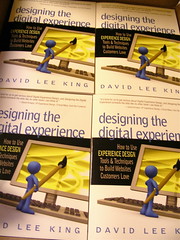
We were talking about our impending website redesign (yes, we’re at it again). I had sent him a rough draft of my redesign plan, and we were talking through it. He had been reading my book on digital experiences, and that had fired off some really cool thoughts about the concept of 3rd place for him… here’s what he said that made us start thinking:

“It’s not 3rd place – it’s The Place:”

  • Typically, Rob has maybe 6 windows open on his computer while at work – email,   a couple of work documents he’s working on, TweetDeck (ok – does YOUR deputy director have TweetDeck open constantly? Just sayin), and a couple of websites – usually including Facebook.
  • He’s doing several things at the same time … but Facebook is always on, and he’s always connected to his Facebook friends.
  • When he’s not at work, Rob has a Blackberry with a Facebook app – so Facebook is always on there, too. He can connect to Facebook whenever he wants to, no matter where he is.
  • Rob can still be in his physical “3rd place” and (important point) STILL BE CONNECTED to Facebook and his friends.
  • And that’s the idea that needs to be translated over to our library’s digital branch.

Our library websites/digital branches will probably never be a real 3rd place to people – and that’s ok. Instead of working towards that, let’s work harder to make this now-old phrase, “be where the patrons are,” a bit more seamless.

good bookRob can be in his 3rd place – but he is also constantly connected to friends/colleagues/family in Facebook at the same time. Facebook, in a way, has transcended the 3rd place to be “The Place.” It’s always on, always available to him, when he wants to be there.

Our library websites/digital branches can be like this, too! So… still developing, but this is definitely going in the redesign plan.

Thoughts? How are you “always there, always on” when patrons want to reach you?

Photo by javaturtle

20 comments

Connecting the Physical to the Digital

by David Lee King on September 14, 2009

IMG_0516Recently, while on a family vacation, I noticed something in a couple of stores … and thought I’d share.

My kids wanted to venture into the Disney Store and Build-A-Bear, and I went along for the ride. While in both stores, I saw signs that directed customers to check out the stores’ websites. But not just for kicks – look at what the signs said:

Disney: “Visit DisneyStore.com for an Additional Selection of …”

Build-A-Bear: “have fun and give back at Buildabearville.com.”

This is cool. Why? In both cases, the stores didn’t just have a sign letting customers know they have websites. Nope. Instead, they directed customers to visit the store websites for specific reasons.

By providing those reasons, they helped extend the customer experience with the store onto the web (and into our homes), after the fact. This type of after-the-purchase experience is sometimes called a “post-show” experience. The actual “show” was buying the product or visiting the store.

We can go a bit further with this, too. Look at the specific instructions we are given: Disney directs us to “an additional selection” of stuff. Think about that for a sec – they’re saying the larger, more complete store isn’t the physical store – it’s the digital store – the website.

Build-A-Bear directs us to their virtual world, where we can “have fun and give back.” OK – I don’t get the “”give back” part. But the “have fun” part I do understand! They’re giving you a specific reason to visit their website, and are suggesting it will be a fun experience. I’m guessing they get a lot of first-time traffic with those signs!

When you leave our libraryGuess what? We can do this too!

Look at this pic of a sign in my library, for instance (bigger version here). For a while, we had this large banner sign up by the exit doors – everyone walking past saw this sign. Our goal was simply to remind people that although they were leaving our physical building, their library experience didn’t have to end there. They can visit our digital branch and still do lots of stuff!

We could also direct customers to our “larger store.” Think about this for a sec – which place gives you a larger selection of library materials: browsing the shelves at the physical library … or visiting the online library catalog and putting stuff on hold?

Your larger, more complete library is NOT the physical building. It’s the website – the digital branch.

I’m guessing there are other ways to connect customers to your digital branch, as well as other reasons to do so… what are they? I’d love to hear them!

9 comments

Think Simple

by David Lee King on August 28, 2009

apple keySimple is good. But that doesn’t mean your site has to BE simple.

Let’s use Apple as an example of this. Apple computers tend to have a “simple” experience attached to them. When you pick one out, there are relatively few choices – three models to choose from (as opposed to Dell, which has LOTS of models to choose from). Macs come with all the software a consumer needs to start out – basic writing, email, photo, video, and web apps – all conveniently installed. And even those apps are simple – iMovie is extremely easy to use, for example – it’s highly visual. Even the power button is simple – it’s the only button on my Mac, as opposed to my kid’s HP laptops – they have a good 5-6 buttons that do a variety of things (including hiding the power button for the uninitiated).

But is my Mac REALLY simple? Think about iMovie again. That scrolling, visual timeline of the video is anything BUT simple to create. It’s simple for the user, sure… but I’ll bet there’s some extremely complicated coding going on on the back end of that visual scroll bar!

good bookNo, it’s anything but simple. Apple has designed my MacBook experience to make sense simply, so I can focus on other things (like write this post).

We can do this with our websites, too. Our goal should be this – Think simple… always. Can we have detailed functionality? Yes – as long as it doesn’t get in the customer’s way. Our goal should be to keep the customer focused on the task at hand – and that task should NEVER be to figure out how your website works. Let’s keep our website innards out of the customer’s way!

4 comments

Bathrooms and Lightswitches

by David Lee King on August 22, 2009

When you walk into a dark room and want to see, what do you do? Simple – you just flip on the light switch. Do you think about how it works? Does it confuse you? Do you stop to marvel at the beauty of the light switch hardware?

How many people ponder the intricacies of electricity or the skills of the electrician?

Probably none of the above … you just want some light, so you flip the switch without even thinking about it. It “just works” – letting you get on with whatever it was you were going to do.

How about bathrooms? When you’re in a restaurant and need to visit the bathroom … ? Do you wonder at the amazing wayfinding expert who came up with the clever directional signage? Do you thank the plumbers, the engineers, and the architects who helped create the bathroom? Again, I’m guessing not.

In fact, if you DO have to stop and puzzle out the bathroom or the lightswitch, the designers failed. Those things should be so easy to use that you don’t have to stop what you’re doing to figure them out. The goal is to keep you going (no pun intended), not stop you in your tracks.

Your website needs to be that simple – start designing digital experiences that don’t get in your customer’s way!

pics by Martin Cathrae & Olivander

4 comments

Writing an Experience Brief

by David Lee King on August 10, 2009

Designing the Digital Experience was reviewed!I just realized that I mentioned using an Experience Brief in my book and in some of my presentations, but haven’t explained much about actually writing one. Since it’s something I want to do for my library’s website, I decided to do some “how-to” research on writing experience briefs … here’s what I found.

First of all – what exactly is an Experience Brief? It’s related to the Creative Brief, from marketing land. A Creative Brief is used to succinctly describe all the stuff the creative group plans to do to promote a new product. An experience brief uses that same concept … but helps define the experiences a customer should experience while using your website.

An Experience Brief is summed up by 8sharp: “The Experience Brief goes beyond “look and feel” and asks, “What is the experience we want the user to have?”"

37signals’ ebook, Getting Real, gives another brief taste of what an Experience Brief is all about. “So what should you do in place of a spec? Go with a briefer alternative that moves you toward something real. Write a one page story about what the app needs to do. Use plain language and make it quick. If it takes more than a page to explain it, then it’s too complex. This process shouldn’t take more than one day.” They don’t really mention writing an experience brief … but writing a one page story about what the app/website needs to do IS a way to focus completely on the experience of the site/app.

MJ Braide goes a bit further in Get More From Brand Strategy Part Two: The Experience Brief. Here are some relevant quotes from the article:

  • “The Experience Brief is designed to help focus on the experiences that have the greatest impact on those that matter most to you. It begins with an inventory of the major interactions with whomever you consider to be your most important audiences.”
  • “For each of the most important groups, target experiences are defined that are closely linked to the brand promise. Important: this is about THEM not about YOU. It is the impressions, feelings and beliefs that you want to occur in THEIR minds, through what you do.”
  • “As with the Creative Brief, the Experience Brief is then used by every division and department of the organization to inform service standards, interaction protocols and whatever else the playbook demands, based on your strategy and the economics of your relationships.”

Finally, some words of advice from Advertising Age – What Are You Packing Into Your (Creative) Briefs?

  • Think simple. The more sophisticated the brief, the simpler it should be. The more glissandi and grace notes the piece has, the harder it is to play.
  • More spaces to fill present a greater opportunity for bad poetry. Avoid theoretical definitions; keep the language at the 8th-grade level.
  • It’s been suggested that you’ll know you’re onto something big when you can pitch the story in under 30 seconds. Can you deliver an elevator speech for your product? Are you writing it to be read?

Hope this helps! ANyone have anything to add? Do you know what goes into writing either an experience brief or a creative brief? Ever written one? Please share!

9 comments

Usability Goes Halfway

by David Lee King on August 5, 2009

me on the iphoneUsability is great – you want to have a website that’s usable, right? Lots of organizations do usability studies – even pay for them. But you know what? Usability only tells half the story. And that’s bad.

Here’s what I mean. Usability deals with traffic control – it answers things like “can they click it?” or “Do they understand the signage?” Usability tends to deal primarily with real estate – with structure (or with the “actual building”). But that’s only one part of the whole problem.

Even one of the fields that usability comes from is suspect – HCI, or Human Computer Interaction. What’s wrong here? The whole focus is on human to computer, or computer to human. I’m not always interacting with the machine anymore. When I blog, tweet, send a Facebook update … when I add a video to YouTube or a photo to Flickr … Yes, I’m interacting with “the machine” to get my stuff into my account, so it appears on the web. But I’m also interacting with the person at the other end – the viewer/reader/watcher/commenter. And to me, that interaction is the goal – not the computer interaction.

Let’s go a bit further with our websites. Start working on the whole experience – not just a tiny part of it. Think of it this way: do you want a website that is functional, or one that engages people? One that maybe even “delights?” That page is designed for the experience – not just for usability.

10 comments

I recently did my first guest post at another blog! Go check out Ten Things to Think about when Designing Digital Experiences at the Open Forum blog from American Express.

From the article: “Visitors to your digital space don’t want to think about interacting with your website. They want to—quickly and easily—make a purchase, find information, or have fun. It helps if they can be engaged and enchanted in the process. How can we facilitate this type of digital experience? These ten tips are a great place to start…”

Go visit the article to read my 10 tips (or just buy the book if you haven’t yet :-) ) … and comment there! I’m curious to see what happens.

4 comments

Create an Experience

by David Lee King on July 18, 2009

Guess what? Your website visitors are experiencing something right now. Is it good or bad? Easy or hard? Do you know? The good web designer plans for and builds deliberate experiences into a website, rather than hoping for the best.

Think about it. Visitors to your website are always experiencing something while there that goes way beyond simple usability. Designing for usability alone only goes so far. You can test for usability until you’re blue in the face … and you know what you’ll end up with? A usable website. Period. Your customers might be able to navigate your website, but hate the overall experience. They might not have reached that user enchantment phase that Kathy Sierra talks about. Since you aren’t deliberately planning out the total digital experience your visitors have while on your site, their experience will be haphazard at best. You did, in fact, create an experience. Just an unplanned one.

good bookSo how do you plan an experience? For starters, do one thing – think about it. Sit down and deliberately think through the experience you want your customers to have while on your site. Have a brainstorming session. Out of that brainstorming session, create what’s called an Experience Brief – a short, no more than one-page document describing the experience customers should have while on your website. Don’t focus on products, content, or functionality – instead, describe the experience they have while there. Here’s a post that talks a bit more about writing experience briefs.

The key to writing an experience brief is this – focus on the customer at all times. Write the experiences your customer should have. Not key user interactions, not functionality the user should be able to do – but the experience the customer should have, from their viewpoint.

So – step one to creating an experience? Purposefully create and plan that experience.

pic by shifted, book by Aaron

4 comments