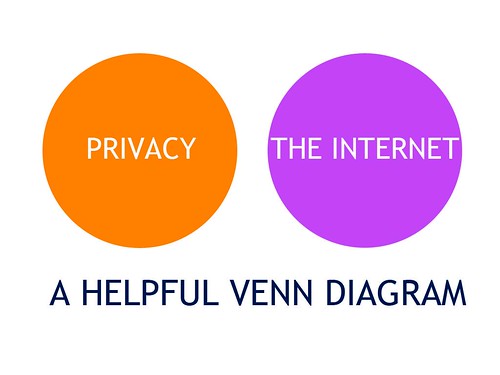
privacy

Finding Yourself on Google… when you’re a Kid

by David Lee King on April 19, 2012

A couple days ago, one of my children showed the rest of the family a funny Facebook meme/game being passed around. Here are the rules:

  1. Open Google
  2. Search your first name
  3. Take the first picture that comes up
  4. Upload it to Facebook
  5. That’s you in 10 years

The rest of us thought it’d be funny to try, so we did. And yes, my family tends to gather around the computer to watch a funny Youtube video, look at a silly website, etc. Anyway, here are the results my family got while playing this game:

  • My son found a normal-looking, slightly-pudgy, balding middle-aged man (I think he said “aww, man!” when that photo came up).
  • My wife found a young woman.
  • My oldest daughter found a female wrestler (she found that sorta odd).
  • Me? I got the naked statue of David, King of Israel (and a bit of ribbing from the family)
  • My youngest daughter, age 12? She found … herself. From one of my Flickr pics (I put her name in the photo description). She found that a little weird, and a little pleasing at the same time – she won the game!

A couple of observations:

  • Kids games these days … how funny that you can make a game out of a google search, huh?
  • Anyone catch what’s involved in playing this game? A Google image search (Image search wasn’t even mentioned, just assumed), downloading an image, then uploading it to Facebook, then posting all of that as a Facebook status update. There’s a good 2-3 skillsets there that some of us have actually taught in a formal setting in the last 15 years, reduced to the ease and throw-away-ness of a goofy game. Wow.
  • Copyright, anyone? Yes, it’s harmless fun. But still, it does involve randomly lifting and reposting photos of strangers into Facebook … without their permission. And it’s easy to do, too.
  • Privacy, anyone? My daughter found herself. In the results of that same search, you can also find a photo of my oldest daughter and a photo of a ballet production both my daughters danced in. Weird, huh?

I’m fine with finding photos of my kids online, and wasn’t too surprised at those results. I know how it works. But how about other people who put private moments online for, say, a grandparent to see? Or someone posting photos and information, and not really thinking of the connectivity that the web provides? That can REALLY freak some people out, and might feel a bit like “Google knows who you are.”

What to do? Teach your customers (and staff) the implications of posting online, whether that’s a blog, a photo-sharing site like Flickr, or even an all-in-one social network like Facebook.

If it’s online, people can find it. Period. Teach people how to set their privacy setting in social networks, and also teach them that once something’s online, it’s most likely available to EVERYONE IN THE WORLD.

And then, teach them how to deal with that. Fun, huh?

Update – check out Posting Photos of Your Kids on Facebook: The Realities by the ReadWriteWeb.

6 comments

Brian Solis and privacy

by David Lee King on November 4, 2011

picture of Brian SolisBrian Solis recently wrote about the changing face of privacy in his blog post Whoops, I didn’t mean for you to read this. It’s a really thorough article about privacy and Facebook, which I mentioned in my last post.

Read the whole thing, but here’s the crux of the article:

Indeed, privacy as we knew it is dead. It is now something that we have to learn and teach. Your privacy settings in Facebook are yours to manage. But, to do so takes initiative and an understanding that like your credit score, what you share online requires definition and reinforcement. Remember, what works against us also works for us. We’re essentially adding a layer of thoughtfulness in our social networking to better tell our story and also enjoy the stories of others.

As mentors, parents, teachers, and good social denizens, it’s up to us to help another while taking responsibility for what we do and say online. At the end of the day, we can’t blame Facebook or developers when those whom we care about change how they see us.

I wouldn’t go so far as to say “privacy is dead.” I would, however, say that we need to actually THINK about our privacy, our level of comfort in online sharing, etc. That is something we should have been doing already, but many of us are still wrapping our heads around it.

Like Brian’s post? He writes books, too. His latest is The End of Business As Usual: Rewire the Way You Work to Succeed in the Consumer Revolution.

1 comment

Changing Face of Privacy

by David Lee King on November 1, 2011

I’m leading a webinar on Facebook tomorrow, and because of that, I’ve been thinking a lot about changes I’m seeing in online privacy.

So, as librarians, we historically have been defenders of our patrons’ right to privacy. It’s in our Code of Ethics: “We protect each library user’s right to privacy and confidentiality with respect to information sought or received and resources consulted, borrowed, acquired or transmitted.”

On the opposite end of that are some pretty hip social media companies, like Google Plus and Facebook. Those two companies seem to have an unstated goal of making our world open and transparent … or at least, as open and transparent as we want to be.

Facebook does this by setting default privacy settings to Public. Google Plus does this (at least for now) by requiring us to use our real names on accounts.

Interestingly enough, some of our library tools are pushing for openness in different ways, too. Here are two examples of that:

  • Many of us are familiar with the Overdrive/Amazon deal. Amazon knows what your patrons have checked out, because they send them an offer to buy the ebook 3 days before it’s due. Amazon is, in essence, using what us librarians consider private info that we would never share, to sell ebooks to our patrons. It’s actually a handy thing to do… but flies in the face of our privacy ethics.
  • My library is in the process of moving to Polaris for our ILS/Library catalog. One really cool feature we’ll be getting is public lists. As a patron, I will be able to keep a list of books that I’ve read … and make that public, embed it on my blog, etc, via an RSS feed. It’s an opt-in feature, but still… very public, and very different from what us libraries have traditionally done.

This brings up quite a few questions in my mind:

  • Are libraries ready for opt-in/opt-out transparency?
  • Are we ready to check TOS agreements to catch and discuss things like that with vendors?
  • Some of us are bound by local or state laws on privacy. Are we ready to have discussions about those laws?
  • At the ALA level … are we ready to start discussing potential changes to our code of ethics and other privacy-driven discussions at a national level?
  • Are you ready to protect your own level of privacy
  • Are you ready to learn privacy settings in each online tool, and teach these to your customers?
So – what do you think? And how is your library addressing privacy issues online? I want to know!

10 comments

Stalking – is it really a huge problem for libraries?

by David Lee King on December 17, 2010

I should state right up front that I know next to nothing about stalking or stalkers – never had it happen to me, never really thought much about it. But I said I’d write about it, so I am.

And I do know this: some librarians are really, really worried that putting themselves “out there” by listing their full names and sharing a picture of themselves on a library website, or even by including their full name on a name badge, will somehow point them out as victims-in-waiting. You told me so.

Here’s an example of that worry, from Nathan, who left a comment on my post about anonymity. Nathan says: “I won’t be pushing for them to have last names, because I know it won’t be accepted and it shouldn’t be. Stalking isn’t a ‘worst-case scenario’ here; it’s an everyday concern. We have a fairly large population of homeless people & mental patients in the city, & multiple stalking or harassment events each year.”

So – the issue is this: some librarians think that by giving out their last names, they’ll be set upon by stalkers. I certainly hear the concern, but before you get all up in my grill about this, let’s take a peek at some statistics, from Stalking Victimization in the United States – a national survey done in 2006.

What are the facts associated with stalking?

  • 14 in every 1000 people were victims of stalking – 3.4 million in 2006.
  • People who are divorced or separated are at the highest risk (34 out of 1000).
  • 3 out of 4 people already knew their stalker (i.e., it was a friend, acquaintance, ex-spouse or ex-boy/girlfriend – 30% were known intimate partners, 45% were acquaintances. Under 10% were strangers).
  • women age 34 and younger are the most at-risk group

So, perhaps a little perspective is needed on this whole stalking thing. Again, I’m certain that it’s a scary thing when it happens, and I’m really not trying to make light of the issue. I’ve known two three  people who have experienced it, and yep – freaked both of them out.

But – statistically speaking, stalkers aren’t going to the web to get your last name. They’re not eying your name badge in hopes of catching that last name either … because your stalker already knows who you are (creepy though that sounds).

So sure, stalking is a nasty problem. Sure, it’s probably not a good thing to publish your home address or cell phone number for the masses to find. Here’s a great resource for figuring out how to remove some of your personal information from public view.

But – most librarians simply don’t fit into the “most likely to be stalked” category. I’m not a female younger than 35. No one in my department is either. And librarians in general? Look around ALA Midwinter in a few weeks … again, not trying to come off as flippant (though some of you will no doubt suggest that I am) … most of us simply don’t fit that profile.

[edit - yep. This was a bad argument]

So – posting your last name on a library website or on a name badge? We ask much more than that of our patrons (first and last names, addresses, home phone numbers, proof of residence, etc). Yes, some of you have pointed out that waitresses, clerks, etc in other businesses don’t do this. Do you really want to compare our profession to part-time sales associate jobs?

I think not.

59 comments

Privacy Part 2 – what’s the problem again?

by David Lee King on December 15, 2010

My post titled Anonymity, libraries and websites received quite a variety of comments – thanks for that! The comments cover the whole nine yards – everything from “well, of course David – yay for transparency” to “no, we’d never do that, and don’t ask us to” – quite a range there!

The main issue seems to be two things:

  1. sharing your last name online.
  2. the possibility of being stalked if you DO share your last name online.

I’m going to deal with those issues, in separate posts. Last names first!

So – some of you aren’t comfortable with sharing your last names or your photos online for work-related stuff, and said so in the comments of the Anonymity post. I was able to group the objections into three loose categories. Let’s take a peek at each of them:

Loose issue #1: Is your last name private info?

Quite a few commenters think that sharing your last name in public – while at work – is somehow an invasion of privacy. Not sure I can agree with that, and here’s why:

  • Most of you are government employees under some form of sunshine law. Your last name (as in, a list of people who work at the library) is public record.
  • Most of your last names are part of other publicly available government records, like DMV records, birth records, and voting records – all publicly available government info that can easily be obtained.
  • Most of you are also in the phone book.

But more to the point for work-related stuff. At my library anyway, we regularly send our staff out into the community, to do things like presentations, storytimes at schools, meetings, committee and community group work, etc. We expect those staff to provide their names, their business cards, their email address, etc. It’s simply part of the job.

So is it any different when doing actual library-related work on the library’s website? Given what my library does … nope [edit - well, we're mainly sharing first names and pics at the moment].

Loose issue #2: Is sharing your last name for work-related things a choice?

A couple of commenters said this:

  • cybermac33 – “I do agree that you have a valid point about transparency however I think it should be a personal choice as whether or not you want your image on the website. We all have a right to privacy.”
  • Deborah – “My own inclination is that it’s great to set a default in favour of transparency, but it’s also vital to make it clear to staff that they can opt out if necessary”

OK – I’ll state up-front that if anyone’s life or well-being is in actual danger, of course there should be an opt-out for those very rare situations.

Otherwise, a library should set their expectations, then follow them. Period. Here’s what Stephen Lusk, our HR manager, said when I asked him about the whole choice thing. He said “sure, they have a choice. They don’t have to work here.” Then he and Gina (our library director) went on to talk about how good managers and good libraries set expectations on work-related activities, then follow those up with annual reviews, etc.

Which brings me to Andy’s comment: “In my system, we are county employees and we wear county employee ID badges. It has our full name on them. Some have taken to making a tag to go over this so that it just shows the first name; others have opted to wear it with just the back showing (hiding their name).”

Silly though it might seem, that’s a pretty petty performance issue that should be dealt with up-front. If your library requires staff to wear name badges with both names, then it’s simply a requirement of the job. Just like the dress code policy (if your library has one).

Loose issue #3 – poor leadership

And Andy’s comment really blends into this last loose issue – that of bad leadership. Here’s a comment from threegoodrats – “At my first job out of library school, we wore name tags with our first and last names. When I started getting obscene phone calls from a patron, we got new name tags with just first names.”

A few other commenters said similar things – there was a policy or a guideline in place, one problem cropped up, and the library … changed the policy or guideline to deal with that single issue, rather deal with the exception that happened (i.e., stalkers). One library moved staff around to different branches rather than dealing with a patron problem.

That’s bad leadership. Deal with the real issues, guys. Yes – sometimes the work is harder, or it might take longer. But in the end, it’s usually the best thing to do.

Next post – let’s deal head-on with those pesky stalkers!

pic by Marcus Vegas

11 comments