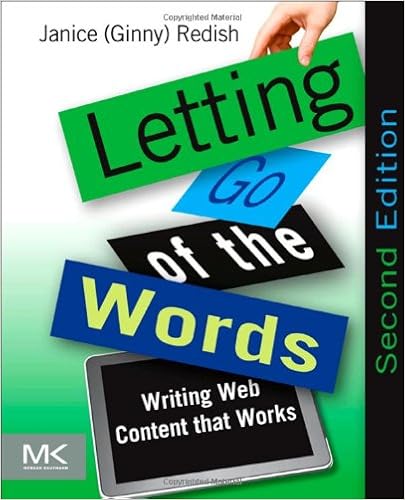
writing

Be Business Casual

by David Lee King on September 6, 2012

In a previous post, I said I’d talk more about being “business casual.” What exactly does being business casual mean?

First off, I have a whole chapter devoted to this idea in my new book, Face2Face (and I’d love it if you bought a copy!). If you want more detail, it’s in the book.

Here are some thoughts on how to be business casual in your interactions. These ideas work for blog posts, status updates, and even in videos:

Write Like You Talk. Most of us were taught that writing was a very formal, proper thing. We were taught to write business letters and academic papers. Guess what? Don’t write like that (Karol, guest blogger over at ProBlogger, agrees). Forget some of those rules, right now. It’s a more formal writing style, and it makes you sound more formal and less approachable.

Instead of a formal writing style, just write like you talk. This is very hard for some people to do! They’ve been trained to write a certain way, and suddenly writing in a different way doesn’t come naturally. If writing like you talk doesn’t come naturally, you can …

Say it out loud. If writing like you talk is hard for you, here’s a simple trick: Simply say it out loud. Read, out loud, what you just typed. Does it sound like you? If not, then rewrite your text so it sounds like something you’d actually say.

Write to your friend. Another trick – pretend you’re writing to your best friend, or a sibling. When you’re writing an email or a Facebook message to a friend, you probably write a bit more casually, as if you were standing there, talking to your friend. You’re familiar with that person, so you are using casual, friendly language with them.

That’s the voice you need to use (minus the inside jokes and potentially off-color language) when writing to customers.

My new book - Face2Face: Using Facebook, Twitter, and Other Social Media Tools to Create Great Customer ConnectionsWear fun clothes – not a suit and tie. If you’re a visual person, here’s another way to think about this concept (and this is why I say to write “business casual”). Picture yourself wearing casual clothes when you write, rather than a tuxedo. It’s another trick to help remove formal language from your writing. Write like it’s “casual Friday” rather than “meeting Monday.”

Use language your customers use. In a library setting, we have to really work at this one – and most businesses are in the same predicament because of industry jargon. Remove all instances of technical language and jargon on your site. An easy way to do this is to simply ask your customers what they’d call something. For example, we removed one bit of jargon at my library by asking our customers what they would call “the room where we put a book they reserved to be checked out.” We actually stationed one of our Marketing interns by our check out line for a day, and had her poll the people waiting in line. We received some great feedback – the room is now called the “Holds Pickup Room” and it works great. Our customers know what to look for, because we named it using our customers’ language. You can do a similar thing with your organization’s products and services. Pick something your customers do, and simply ask them what they’d call it.

Do some behind-the-scenes videos. Show what goes on in the office or behind-the-scenes. This type of video captures workers in their element (at the office, doing their work), rather than artificially standing in front of a backdrop, with lights shining on them, talking to a camera. You can even interview them. Blip.tv does a great job of this with their Blip on Blip video series. They walk around their workplace, taking videos of staff and and sharing those videos with the Blip.tv community. This type of video shows real people at work, having fun. Getting to know someone by watching them in a video helps customers. When a customer has to call in for support, for example, they might just “know” who they’re talking to – because they just watched that customer service rep in a video.

Represent Your Organization, not Yourself. Finally, remember this: when you share that slightly casual, personal voice, and you’re doing it for your organization … you are essentially representing that organization. You become the voice for your organization or business. Your website, your content, and your employees have unique personalities. This uniqueness will come out. Your brochures were written by people who have a voice, and some personality comes from those, too. All that adds up to an organizational personality. Even your physical building (if you have one) has a feel or personality. The challenge is to make these match so you can present a uniform image. Sit down, do some planning, and map out each aspect of your organization – the building, the marketing, the website, the staff. Plan the voice of your organization.

These are some ideas of how to be business casual online – do you have others? I’d love to hear them!

Business casual image by Bigstock

3 comments

We’re Writing a Novel!

by David Lee King on May 7, 2012

book and ebookMy library is heading up a really cool project that I thought I’d tell you guys about.

In short, we thought we’d write a novel.

A community-driven novel, that is. Here’s a blurb about the project: “A community novel is one that is written collaboratively by members of your community. The library invites writers to each contribute a chapter to advance the group’s story. The story is set in Topeka and will use landmarks and a setting that all will recognize. Writing and publication began in April and continues through August with a chapter added each week (just like any other serial novel you’ve experienced). Each chapter will appear here so you may read them in order, with a new chapter published each week.”

Here’s a link to the main page for the project, and here’s chapter one. Please read it!

When we’re done writing the novel, we plan to throw an author book signing party! We also plan to publish the book in both ebook and print formats, and sell it online. And we’ll put the book in our collection, so people can check it out.

We have two goals:

  1. We want to showcase content creation in our local community, and this type of focused writing project provides us with a fun way to start doing that.
  2. We also want to get our feet wet in content creation. Libraries traditionally house books, help customers find books, and create programs around books and authors, etc. Why can’t a library and a community … create a novel?

Anyway – check it out – chapter two comes out this week!

book pic by Remi Mathis

4 comments

Why Isn’t Your Stuff Getting Read?

by David Lee King on April 7, 2011

Are your library blog posts getting read? If not, here are some possibilities as to why:

Bad content. Simply put, your content might not be all that good to begin with. Maybe it’s stuff you’re interested in, but your patrons don’t share that interest. How to fix it – Why not find out what your patrons are interested in, then write about that?

Poorly written content. Maybe the topic is on-target, but your writing stinks. If your writing is hard to read, guess what? Your patrons probably won’t read it. How to fix it – Why not work on improving your writing skills? Go consult some of those “How to Write” books in your library’s collection. Let the good writers on staff write your blog posts. Use modern web-writing standards.

Your website looks bad. If your website site looks icky, people will assume the content is icky too. How to fix it – update that website. Use a modern CMS like Drupal or WordPress, and use a nice-looking visual template design (or find a talented graphic designer that understands how to design for the web). Make it look as professional as the rest of your library.

Your content is hidden. Is your content hidden under multiple links? Not pulled out in an obvious way so people can find it? If so, that could be the problem. Why? Because your customers aren’t going to hunt for it. How to fix it – pull that content out. Put obvious links on your library’s main page that lead to your great content. Make sure your site is easy to use.

You’re not promoting your content. Maybe your writing is good, the site looks inviting, and your content is easy enough to find – but you’re simply not telling your patrons about it. Instead, you’re playing that passive “oh, I hope How to fix it – promote your blog posts. Instead of making a nice mystery book display in the library, write some short, pithy book reviews. Post those. Then drop the link onto your library’s Facebook Wall, and ask for responses. Ask people to Like it, for their thoughts … which helps spread the joy of your writing into other people’s walls, potentially lead to other comments, etc. Then rinse and repeat.

What would you add?

pic by vial3tt3r

7 comments

Librarians were trained to Write the Wrong Way

by David Lee King on April 5, 2011

Just thinking about writing for the web. My writing developed this way: I went to school, and learned to write academic papers and speeches. Ok, I also took some poetry and creative writing type classes. And a couple of journalism classes so I learned the inverted pyramid thing.

But other than that, it was pretty much formal academic-type papers. I also learned highly useful stuff … like how to graph out a sentence to discover proper sentence structure. Yikes.

I learned to write in a way that required citations and quotations, which I refined in grad school (I even used one of my class papers as my first official published article). Then the web hit, and I had to learn to write in a new way.

So now, I work hard at writing like I speak. I try to “write it like I say it.” For some people, actually reading what they just wrote out loud can help develop that voice.

Why work at this? Because that type of writing is conversational, social writing. And that’s the type of writing we want on the web – especially in places we are looking for conversations (think blogs or social media spaces).

We are now writing out our conversations, and asking our patrons to respond. To continue the conversation.

How are you learning to write for the web? Have any resources to share?

pic by vial3tt3rs

23 comments