November 2008

YouTube Being Naughty Today

by David Lee King on November 24, 2008

youtube being naughtyInteresting problem I had to deal with today … Here’s the run-down:

A month or so ago, some of my library’s teen patrons participated in a Making Mini Movie Masterpieces program held at my library. Cool program!

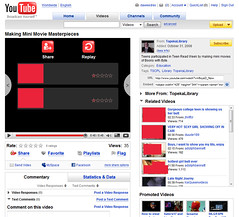
One of our librarians just posted the videos some of the teens made to YouTube … and guess what? In the related videos section of the video page (and also on the related videos flash thing that plays at the end of an embedded YouTube video), some … let’s just say “questionable” videos appeared.

Here’s what I think happened: YouTube found “similar” videos based on keywords. And the keywords it found in our video include these words in the title and description: mini teen teens . Dump those into YouTube and you’ll unfortunately find some pretty “interesting” videos.

Naturally, we don’t really want those thumbnails appearing on our library’s website, so we are fixing it in two ways:

  1. Good idea from our Web Developer: “There is an option when creating the embed code to include or not include links to “related” video.  For this one I have gone ahead and embedded a new video without the related video thumbs at the end.”
  2. From me: Change the title of the video “Making Mini Movie Masterpieces” to something without the word “mini” (maybe just “Making Movie Masterpieces”) … and remove the “teen” and “teens” words in the description – maybe change them to “young adult.”

What an odd problem … and something you might want to be on the lookout for. ANyone else run into this type of problem, and if so – what did you do?

20 comments

Attracting Friends, Part 2: Twitter

by David Lee King on November 22, 2008

In my last post, Attracting Friends, Part 1, I discussed how to attract friends for your library social networks generally … by doing the hard work. Now on to the specific tools – how do you find and attract friends, as an organization, using Twitter? Here are some ideas:

  • use local services like TwitterLocal or TwitterMap to discover local twitter users, and subscribe to their feed. Say hi. Interact with them. They won’t friend you if they don’t know you’re there.
  • put a Twitter chicklet on your site. You can use a chicklet that does a specific thing, like TwitterCounter (shows the number of people following you – I have an example on my site), or a generic chicklet/graphic link that simply announces that you use twitter. Go one better, and say “follow me on Twitter” in your link/chicklet. This announces that you’re looking for followers.
  • Does your organization have accounts set up in other social networks, like Facebook, flickr, or YouTube? Mention your Twitter account on those other profile pages.
  • Do local media/businesses use twitter? Connect with them. For example, in Topeka, my twitter friends include some tv news anchors and the general manager of a local news station. Connect with them, and start talking. Others that have connected with them will notice, and maybe follow you.

What am I missing? Please share!

Update: This is part of my slowly-growing series on organization-based friending in social networks. Here’s what I have so far:

9 comments

Attracting Friends, Part 1

by David Lee King on November 17, 2008

A couple posts ago, I suggested that libraries stop friending other libraries and to focus instead on their local community. (aside – If you need/want to connect with other librarians, that’s great – make your own personal account for that).

Now, on to how? What are the different ways one can friend others in popular social networking sites, and how can you find and attract friends in each? That’s a bit more difficult, and takes a bit more work. I’ll take a couple of posts and give some pointers (and would love for you to join in and suggest your own idea,s too!).

Here are some general ideas that work for most of the new social networking tools:

  • Setting goals (have I mentioned this one enough?). You need to figure out what you want to achieve with your twitter/facebook/etc account. Do this first!
  • Focus on a target audience – it might help to focus on a target audience, rather than to focus on a generic “patron.”
  • Be human, instead of a stuffy organization. @Zappos and @Timbuk2 do this well in Twitter – when you send them a question or comment about their product, you generally get a real, live person replying, being helpful, answering questions, etc. (hmm… that sorta sounds like a reference librarian).
  • Good content rules! Make interesting posts/tweets/updates
  • Advertise/promote it! Think business cards in the library, articles in the library newsletter, etc.
  • Link to it on your website, and explain what it is and why I should care.
  • Find out where people who use these tools hang out, and go there. And post flyers, pass out cards with your social networking info on it, etc. in those establishments (I’m thinking bulletin board in a coffee shop here).
  • Teach classes on the tool. Show attendees how to set up an account, and how to follow the library. Instant followers!
  • Even better – do the same thing at a local chamber brown bag lunch or other business oriented gathering. Show them how the library can meet real needs via these tools.
  • Library programs/events? Take the first 2 minutes and push it there.
  • Colleges/high schools nearby? Put an ad in their newspapers.
  • How about a local newspaper or local magazine? Put an ad there or check into writing an article for them (better yet, a weekly tech column).

You might have noticed that most of my suggestions on getting friends for social networking tools … doesn’t involve using the tool to make friends. Instead, it’s all about YOU leaving the library and meeting your community. Getting out of the building. Actively introducing your community to these tools. Or even talking to peole inside your library that you notice use the tools.

That’s the hard part – lots of walking and talking and meeting people, physically and digitally. But it will pay off.

Next post – I’ll look at some specifics of finding friends by using the tools – Twitter, Facebook, MySpace, YouTube and Flickr.

Now – on to your ideas. How do you get friends with social networking tools? Have I left off anything?

photo credit

Update: This is part of my slowly-growing series on organization-based friending in social networks. Here’s what I have so far:

4 comments

Excerpt of Chapter 5 up at Webjunction

by David Lee King on November 16, 2008

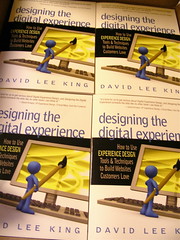
my book arrivedWebJunction recently excerpted chapter 5 of my new book in this article: Designing the Digital Experience: What is Community?

Here’s an excerpt of the excerpt:

Chapter 5 – What Is Community Focus?

What exactly is community focus, and how does it facilitate experiences in the digital space? To answer these questions, let’s consider what community focus means in the context of physical spaces, such as in a town hall meeting. In such meetings, people are focusing on one another: listening, sharing opinions, and discussing community needs. This type of interaction allows community members to voice opinions and concerns, providing a voice for the community. In this context, we can say community focus is an emphasis on participants’ ideas, concerns, and interactions.

The town hall meeting is just one example; people obviously hold many different types of meetings, from religious gatherings to departmental business meetings to family reunions. We tend to think meetings are important. Why is that? Because we find conversation important, and meeting together facilitates conversation.

Conversation inherently facilitates something else, too. It allows us to interact with members of our community with whom we wouldn’t normally interact or even know. This type of interaction allows us to feel as if we are participating in the “grand scheme of things.” The challenge, then, is to usher community into our digital space.

Go read the rest of the excerpt (or buy the book :-) ).

Be the first to comment

Tinkering in the Techie Toybox – my presentation

by David Lee King on November 14, 2008

I just finished a webcast presentation for the SirsiDynix Institute titled Tinkering in the Techie Toybox: Staying on Top of Consumer Technology. As promised, here are some links mentioned in the presentation:

And a copy of my slides (SirsiDynix recorded the presentation and will be posting that, probably within the next week or so).

10 comments

The Edge – Our New Teen Center

by David Lee King on November 12, 2008

Check out my library’s new Teen Center! A little more about it: “The Edge, our new Teen Center, has opened! What can you do at The Edge? Well… lots: meet with friends, play games, read, study, do stuff on the web, watch movies, and listen to music. We also hope to have live performances by garage bands, Guitar Hero competitions and crazy karaoke.”

Read more about it here. Kudos to my library for building something that’s pretty cool.

2 comments

More on Friending

by David Lee King on November 12, 2008

i just bought a macOne of my last posts, Don’t Friend Me, discussed my thoughts on libraries friending other libraries. A couple of commenters didn’t agree, and said so in my comments – which is cool – in fact, you might want to check out the discussion and chime in yourself, if you haven’t yet.

Instead of answering individual comments with another comment, I thought I’d lump a couple of comments/questions together and make another post out of it. See what you think, and feel free to comment, as always.

But first, you have some required reading. Go read Darren Rowse’s (the problogger guy) post, Defining Twitter Goals: A Tip for Successful Use of Twitter (on his new twitip blog). A quote: “Being successful at something is very hard if you don’t know what you want to achieve. It’s much easier to hit your target… if you know what it is.” He goes on to explain how goals are needed in the use of social networking sites. So… go read it … I’m waiting …

OK then. Here’s where I’m going … I think that many libraries haven’t really figured out goals for their shiny, new social networking sites/tools. When they start collecting friends, they immediately pick the safe route – friending primarily other libraries that are doing the same thing.

And that’s great for learning the new tool. But at some point, it’s a good thing to figure out what you really want out of the SN site, and then start pursuing that. My guess is this: the goal in friending isn’t to gather other libraries – it’s to gather patrons as friends.

Now, on to the comments:

Bobbi said:

“By nature people are joiners”

Have you read Groundswell? It purports that only a percentage of people are joiners. Check out their profile tool – for example, I put myself into it (42 year old US-based male), and here’s what their research shows: only 34% of my age group are joiners. More in the next quote…

“I’m not sure they do look to see who else is friends unless they are looking for people they know…”

Speaking for myself, I always look – I don’t want to friend a spam site, a person more interested in selling me something, etc… And I’ve read danah boyd, who says “… that “public displays of connection” serve as important identity signals that help people navigate the networked social world, in that an extended network may serve to validate identity information presented in profiles.” danah’s research implies that they do, in fact, look.

Kelly:

“If a patron wants to use a library Facebook or MySpace page, they will, if it works for them and fills a need they have”

Agreed – I have no beef with that. I think that’s putting all the responsibility on the patron, though. Libraries can do their part, too – by creating goals for a social networking site, and then working to meet those goals.

Susan:

“Why tell libraries/librarians that they are … friending all wrong?”

Because I have a lot of libraries asking me why they aren’t getting any friends, or complaining that their friends are all from other libraries … they see that, then assume “it must not be working, right?” Those libraries have already noticed that they aren’t connecting with their local communities (that’s what they tell me they want to do), and are wondering what to do about it. So I’m trying to help.

“Fear of change” and “not being perfect” as I recall are factors that we are encouraging librarians not to be.”

Exactly. That’s why I write – to throw out ideas. Hopefully some of them work for some people. No one’s perfect – but we can all improve, right?

“Why not talk about this issue the other way around, perhaps a post about the hierarchy of friending?”

I’m planning on that in a future post…

John:

“Then I began thinking about the great opportunity missed out by not intermingling here”

Right – that’s why we have a library/organizational account, and I have my personal account.

***************

Libraries do indeed exist to connect with their local communities – we’ve done this way before the web was around! A digital social network like Facebook or Twitter is no different. Our goals should still include connecting with and serving our patrons.

Update: This is part of my slowly-growing series on organization-based friending in social networks. Here’s what I have so far:

14 comments

SocialMinder – your thoughts?

by David Lee King on November 11, 2008

Three people asked me to try SocialMinder, so I did. SocialMinder “is an online assistant that helps you maintain relationships with your LinkedIn network” (from their website).

Here’s what I saw – I was asked to add in my LinkedIn contacts, and then I was emailed a report telling me which relationships “should be strengthened” – meaning people I haven’t connected with on LinkedIn for the longest.

What’s wrong with that? The six people SocialMinder told me I’d needed to connect with … I have. Five of them I saw last month at a conference, 3-4 of them I see daily on Twitter. One of them I’ve connected with through Facebook.

So for me, SocialMinder is a cool idea, but didn’t work. And I wanted to share that with them, so I clicked on their feedback link… which took me to some Digg-like “vote for the best improvement” thingie.

Moving on… :-)

10 comments

Don’t Friend Me!

by David Lee King on November 7, 2008

do your library friends look like this?Libraries… stop friending me! What???

I’m noticing that when a library decides to start a flickr account, a twitter feed, or create a Facebook page, they naturally want to start “making friends.” So what do they do? They friend me. Or you. Or they friend other libraries.

This is bad.

Why?

Social networks exist to connect with other people, right? When your organization decides, say, to create a Facebook page … who are you trying to connect with? Me? I don’t live in your neighborhood. Another library on the other side of the world? They’re not going to use your services.

Who are you trying to connect with? If you can’t answer this question, take a breather from the web for a couple of days and figure out your answer. Think about it for a sec – you wouldn’t open a new branch if you didn’t know your target audience, would you? Do you invite people to a book group with no idea of what book to read or who the target audience is? I hope not.

It’s the same with social network sites – you need to establish a target audience, and then work on finding that audience. Once you do that, my guess is this – the friends you want to attract probably don’t include me or a library from the other side of the country!

Another way to look at this is from your customers’ point of view. If I use [fill in your favorite social tool here], and I discover your page, one of the first things I might do is check out who your friends are. If they are mainly other libraries, I might decide it’s a librarian thing, and not for me. I’m gone!

Don’t get me wrong. It’s great to get ideas from other libraries, and to spy on their social media tools to see what they’re doing. But if you can, try not to accept too many friend requests from other libraries … or your friend page will look more like an ALA reunion rather than a true reflection of your local community.

Update: This is part of my slowly-growing series on organization-based friending in social networks. Here’s what I have so far:

41 comments

Planning for Success Cookbook from MaintainIT

by David Lee King on November 5, 2008

From Brenda Hough at MaintainIT:

“The MaintainIT Project is happy to announce the latest Cookbook!
“Planning for Success”
http://www.maintainitproject.org/cookbooks/planning-for-success

It’s a free online resource with current ideas and best practices for
planning, building, and managing your library’s computer technology.
Librarians around the country have contributed their knowledge on
topics ranging from security solutions and strategic maintenance
practices to community building experiences involving Web 2.0 tools
and vital partnerships. And the Cookbook is FREE.

Cookbook topics include:
-       Total Cost of Ownership (TCO)
-       Evaluations and Metrics
-       Talking with non-techies
-       Standardizing your IT infrastructure
-       Leasing computers
-       Disk-cloning in libraries
-       Remote desktop software
-       Hiring the right techs
-       Selecting and configuring a firewall
-       Gaming in Libraries
-       What to Consider When Evaluating and Implementing Web 2.0 Tools in
Your Library
-       And more!!

Thanks to everyone who contributed to all three Cookbooks. These
resources reflect the impressive work you all do, and we’re so happy
to share them with everyone.

Don’t forget to check out the FREE webinars MaintainIT offers, too:
http://www.maintainitproject.org/events)”

********************

Go check it out – there’s lots of good stuff here!

1 comment